NVIDIA launches GR00T 2 and Isaac Lab 3.0 at CoRL
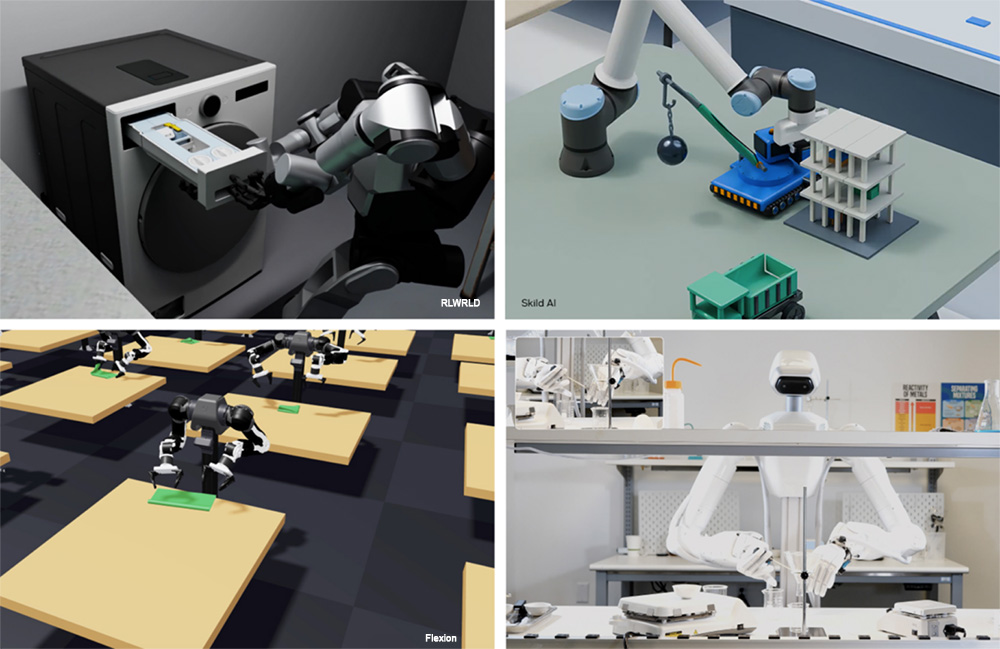
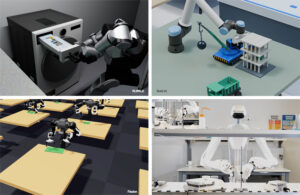
A number of developers, including RLWRLD, Skild AI and Flexion, are already using NVIDIA’s latest technology. | Source: NVIDIA
NVIDIA Corp. today introduced GR00T 2, its updated open frontier world action model, and Isaac Lab 3.0, the latest version of its open source robot learning framework. The company made the announcements at the Conference on Robot Learning, or CoRL, in Austin, Texas.
NVIDIA also took a look at how its partners, such as Ambi Robotics, Bosch Research, Dexmate, Dyna Robotics, FieldAI, Flexion, Noitom Robotics, Siemens, Skild AI, RLWRLD, UC Berkeley, Walden Robotics and the University of Washington, are using these technologies.
Additionally, NVIDIA hosted the MSIT-NVIDIA AI startup partnership forum at COEX. There, the company announced an investment in South Korean startup Point2, with further investments planned in Motif Technologies, RLWRLD and Upstage.
This week is a precarious time for NVIDIA. Yesterday the company’s board of directors opened an investigation into co-founder and CEO Jensen Huang. This came in response to Huang acknowledging to NVIDIA’s board of directors that he had an intimate relationship with a company executive who US intelligence determined was a Chinese spy.
In a statement, the board said it had “no reason to believe that national security or NVIDIA’s secrets have been compromised.”
NVIDIA boosts its global action model with GR00T 2
NVIDIA said it trained the GR00T 2 on diverse human and robot data. The model includes 100,000 hours of NVIDIA open source egocentric data and is designed to allow the robot to learn skilled manipulation skills.
Key features include:
- Out-of-the-box performance: GR00T 2 completed 40 of the 50 activities assessed at least once without specific demonstrations of the activity.
- Transfer of skills: It learns from human demonstrations and transfers skills between different robotic bodies without robotic demonstrations
- Generalization with little data: The model achieved an average success of 71% across 50 tasks with only one demonstration per task, rising to 95% with five.
- Agent Control: AI agents can use GR00T 2’s application programming interface (API) and supporting tools to sequentially execute skills and recover from errors.
The GR00T 2 currently ranks in the top three models across all vision-language-action (VLA) model and world action model categories for the RoboCasa365, RoboLab, RoboDojo and MolmoSpaces benchmarks, with multiple ranking wins, NVIDIA said.
The company said its open workflows and models provide researchers with better tools for collecting and annotating data. For researchers creating datasets for training robots, NVIDIA’s new open Video to Data workflow transforms human videos into simulated robotic demonstrations, with a challenge inviting researchers to develop it.
The NVIDIA EgoHand open model reconstructs hand movement in 3D, trained with Noitom Robotics data.
Nexuni is testing GR00T 2 for robotic laundry. Foxconn is applying GR00T 2 to factory automation for server manufacturing, and Siemens is evaluating it in industrial use cases.
MicroAGI uses GR00T 2, post-trained via reinforcement learning, to perform Ethernet cable swapping with a YAM robotic arm. Its agent-based robotics approach automates the creation and calibration of simulation environments using Isaac Lab 3.0 and Newton, where the policy is trained.
Isaac Lab 3.0 provides the foundation for simulation training
Its latest release, Isaac Lab 3.0, allows researchers to use agents to quickly set up training environments with simulation-ready assets, switch between NVIDIA PhysX and Newton physics solvers, choose renderers for perception-based training, and apply a new post-training reinforcement library to baseline models like GR00T.
Accurate physics is key to transferring skills learned from simulation to the real robot, NVIDIA noted. Tighter integration with Newton, an open-source physics engine, now allows Isaac Lab to model deformable objects such as cables and fabrics, along with complex jointed systems such as robotic hands with many interacting joints.
Together, Isaac Lab and Newton combine accurate physics and scale to allow researchers to train thousands of simulated robots in parallel. In a vision-based skillful manipulation benchmark, Isaac Lab 3.0 with Newton would achieve up to 2.5 times the training performance of Isaac Lab 2.3 with PhysX.
NVIDIA introduces new industrial benchmarks for robotics
Learning a skill is a challenge. Running it reliably under changing conditions is another. NVIDIA’s Isaac Lab-Arena is an open source framework for large-scale policy evaluations. Isaac Lab-Arena allows developers to compose diverse, repeatable assessments, then execute policies on thousands of variants in parallel.
Analyzes reveal which conditions cause failures, so researchers know what to fix in subsequent training runs. NVIDIA has released the developer preview of version 0.4 at CoRL. DexBench and VABAR, two new open benchmarks, are among the first designed to measure the dexterity and adaptability of robots in industrial tasks using Isaac Lab-Arena and Newton.
DexBench, developed by RLWRLD with NVIDIA, takes dexterity assessment off the table and into real-world workflows, contributors said. Built using NVIDIA Isaac Lab-Arena, it features 15 tasks in four scenes spanning retail, logistics, manufacturing and hospitality, testing generalization across object, spatial and physical variations.
Genesis AI, Mimic Robotics and other industry partners are evaluating DexBench through early access. Teams can run DexBench on Manifold, Bifrost’s evaluation platform for scaling robotics simulations, with no setup required, built-in failure analysis, and free credits for initial evaluations.
VABAR, the Variational Automation Benchmark for Agentic Robotics, from UC Berkeley and NVIDIA, evaluates robots in six industrial tasks. Each brings standardized variations, difficulty levels, and success metrics.
How are robotics companies using NVIDIA technology?
Robotics developers are already putting NVIDIA’s latest technology to the test. Numerous developers use Isaac Lab 3.0 and Newton. At CoRL, Skild AI announced Scalable Throughput-optimized Engine for Embodied Learning, or STEEL, a new Newton-based rigid-body physics solver to accelerate robot training with Isaac Lab.
Flexion showed how Isaac Lab and Newton help train Reflect, its model of robotic intelligence that combines reasoning and whole-body manipulation. FieldAI uses Newton, as well as Isaac Lab and Isaac Sim, to train and validate robot policies for deployment in real-world, unstructured environments.
Dyna Robotics said it will demonstrate how parallel simulation in the Isaac Lab helps train full-body controllers for its Taku semi-humanoid robot for work in warehouses, hotels and food service.
Walden Robotics uses Isaac Sim’s photorealistic rendering to train and evaluate its general purpose robot in virtual environments for manufacturing and logistics. Dexmate is exploring how coding agents can test and refine manipulation strategies in Isaac Sim before executing them on his Vega robot.
AlphaNIST, built at Isaac Lab, demonstrates how efficient practice can translate into precision. A single policy learns all 20 NIST Assembly Task Board tasks, manipulating millimeter-scale parts using only a yes or no success signal. It achieves over 98% training success, compared to 81% with separate policies per task, while using approximately 39x less GPU time.
Behind these results is Success-Guided Sampling, or SGS, from the University of Washington and NVIDIA. The method focuses practice on the tasks a politician can successfully perform about half the time, targeting training toward the skills she is still learning. With SGS, robot training can span over a million parallel environments.
The University of Texas at Austin’s School of Computing and Texas Robotics uses Isaac Sim and Isaac Lab to train robotic skills in simulation, allowing students to start developing before physical hardware is available.
Propose your innovation now!






Post Comment