
NVIDIA delves into Korean sovereign AI work on chips and rack systems – Unite.AI
NVIDIA announced on November 9, 2026, an expanded collaboration with the Korean Ministry of Science and ICT spanning AI chips, data centers, models, expertise and agent security. The hardware project centers on Rebellions’ R200 processors and NVLink-based rack systems, which are expected to be ready for deployment in 2028.
According to the joint announcement, Rebellions will connect its next-generation Rebel R200 neural processing units (NPUs) to the NVIDIA platform via NVLink Fusion and use the MGX architecture for rack-scale system development. SK Telecom plans to deploy the systems in its AI data center, connecting them to proprietary models and public-facing services as part of AI for All. MSIT is touting the project as the start of broader work between NVIDIA and Korean NPU companies.
Racks with mixed processors Divide the inference work
Rebellions describes the R200 as designed for low-latency, energy-efficient inference on frontier models, including models with trillions of parameters. NVLink Fusion enables chipmakers to combine specialized silicon with NVIDIA’s high-bandwidth, low-latency scale-up networking and established infrastructure ecosystem.
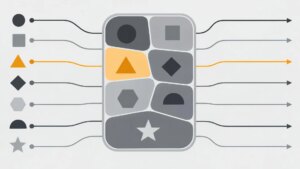
Companies plan for disaggregated inference, which assigns different stages of AI response generation to the processor architecture best suited to each task. NVIDIA GPUs would handle the precompilation and decoding of the Rebellions NPUs, with the goal of improving inference throughput and power efficiency.
The MGX architecture provides a common rack footprint as well as power and cooling elements that GPU and NPU systems can share. Shared design can support data center planning alongside Rebellions processor and system development, while the MGX ecosystem offers access to original design manufacturers and component suppliers.
Implementation of the model and training of the workforce
Through AI for All, NVIDIA will work with three selected consortia and four Korean foundation model builders, using Dynamo to optimize and scale inference. The attached implementation recipes cover SK Telecom’s AX K2, LG AI Research’s K-EXAONE 2.0, Upstage’s Solar Open 2, and Motif Technologies’ Motif-3.
Dynamo is an open source distributed inference service framework for multi-node deployments at data center scale. Coordinates the routing and communication of requests when a model passes one GPU and is split across multiple GPUs.
NVIDIA reports that the recipes, optimized for B200 GPUs, deliver up to 2x faster performance. They aim to help developers bring Korean open models into production and support widely accessible AI for All services.
The workforce component adds NVIDIA training and certification programs, hackathons, and technical workshops aimed at strengthening GPU usage. It extends the program beyond hardware and software to the operational skills needed to run a GPU-based infrastructure.
Agent security joins collaboration
Regarding agent security, NVIDIA announced that Hyundai Motor Group is exploring the NemoClaw and OpenShell runtime projects. Korean security firm AIM Intelligence is integrating its Starfort agent control platform with OpenShell for employee productivity and enterprise workflow agents.
OpenShell, part of the NVIDIA Open Agent Safety Platform, provides sandbox execution and policy-based controls for sensitive data, access to enterprise tools, and autonomous agent actions. The Starfort integration aims to combine such run-time access controls with detection of malicious instructions and data leakage. AIM Intelligence is also evaluating a preliminary proof of concept for the public energy sector.
The practical implication is a split between software and hardware availability: model-serving recipes are released for Korean developers, while mixed GPU-NPU racks still require processor integration and system development before SK Telecom’s planned deployment.











Post Comment