CrowdStrike targets rogue AI agents with insider threat detection – Unite.AI
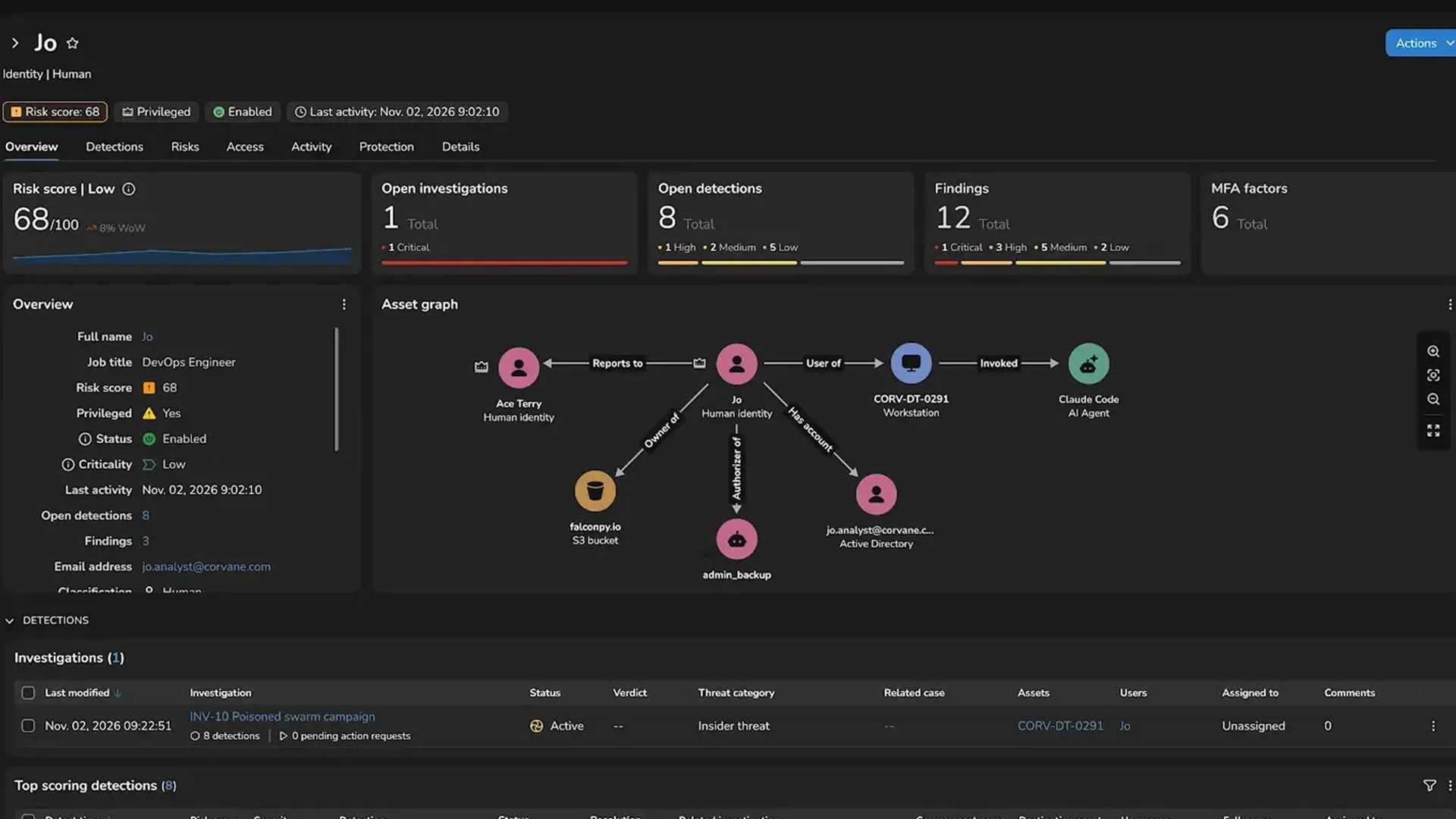
CrowdStrike announced on November 4, 2026 at Fal.Con Europe in Barcelona that it will add Agent Insider Threat Detection to Falcon Next-Gen SIEM in the fourth quarter. The announcement pairs this future capability with generally available coordinated multi-agent investigations, linking behavioral alerts to cross-domain investigations and response.
The target case is a business agent with system-level access to sensitive data and autonomy to act on it. If the agent is manipulated or deviates from expected behavior without violating a rule, policy and log-based tools have no explicit violation to detect. They may also have difficulty distinguishing the actions of the agent from those of the person managing it, leaving a behavioral problem that may appear legitimate at the individual event level.
Agent Insider Threat Detection is designed to learn the normal behavior of each AI agent and its owner, then flag deviations even when no policies are violated. It adds this risk to the score that Falcon Next-Gen SIEM creates for the owner and host and directs anomalous behavior directly into a coordinated investigation. The trigger then goes beyond a broken rule towards a change in behavior, with identity and host context implicated in the investigation.
Coordinated investigations reach general availability
The now generally available investigations were revealed on September 2, 2026 at Fal.Con in Las Vegas. Charlotte AI dispatches expert-trained agents in parallel across endpoint, identity, SaaS, cloud and network domains. They work on a shared level of context rather than conducting isolated investigations, then converge on a verdict with visible reasoning and justification.
This design solves the assembly problem in cross-domain investigations. Analysts can examine agents’ reasoning instead of manually piecing together findings from separate domains, while shared context allows information learned by one agent to inform others working on the same investigation.
Detection and investigation fuels a response layer that includes the Kill Switch AI Falcon Guardian, which terminates an agent. Analysts also have agent interrupt to pause or stop a Charlotte AI or AgentWorks agent running during a task, a control intended to prevent unauthorized actions and runaway spending.
Human checks and subsequent detection phase
Charlotte Agentic SOAR is available as a single governed workspace for agents, workflows, and custom applications, with autonomy settings ranging from human approval to fully autonomous execution. Its human-in-the-loop controls pause an agent when it invokes a sensitive tool and raise a request for action. Analysts can approve the action, reject it with a documented reason, or inspect the entire agent trace, creating a reviewable decision point around tools that provide tighter control.
Several related controls are listed for the same Q4 roadmap. The AI ecosystem detections are intended to cover LLM API abuse, stolen API keys, and compromises involving coding assistants, MCP servers, and agent frameworks. Approval gates are expected to extend from individual tool calls to entire agents, applications, and workflows.
AI Credit Visibility and Control is designed to provide real-time consumption visibility, mid-run interruptions, and decisions on whether to increase or deny limits when an agent reaches the maximum limit. This pairs spending controls with security approvals, giving administrators the ability to stop self-employment when resource consumption becomes unacceptable.
A follow-up article, Policy-Drift Agent Guardrails, is expected in the first quarter of fiscal 2028. Falcon Guardian will examine interactions between Charlotte AI and AgentWorks for policy drift, rogue tool calls, and out-of-bounds data access. Unreleased services and features remain in development and subject to change, making these labels and programs a roadmap rather than current availability.
The release assembles a multi-stage agent safety workflow: coordinated investigations and operator checks are now available, behavioral detection is listed for Q4, and policy drift guardrails are further away. For advocates, this leaves a practical distinction between reviewing or stopping an agent’s action and identifying the subtle behavioral change that should trigger the response.











Post Comment