OpenAI Unveils Mouse Brain Reasoning Atlas of GPT-Rosalind Agents – Unite.AI
OpenAI on October 21, 2026 announced that, together with PerturbAI and Scripps Research, they used thousands of GPT-Rosalind-based AI agents to analyze existing experimental data from millions of mouse brain cells in 32 minutes, combining the agents’ reports into a publicly available reasoning atlas.
Distributed biological reasoning
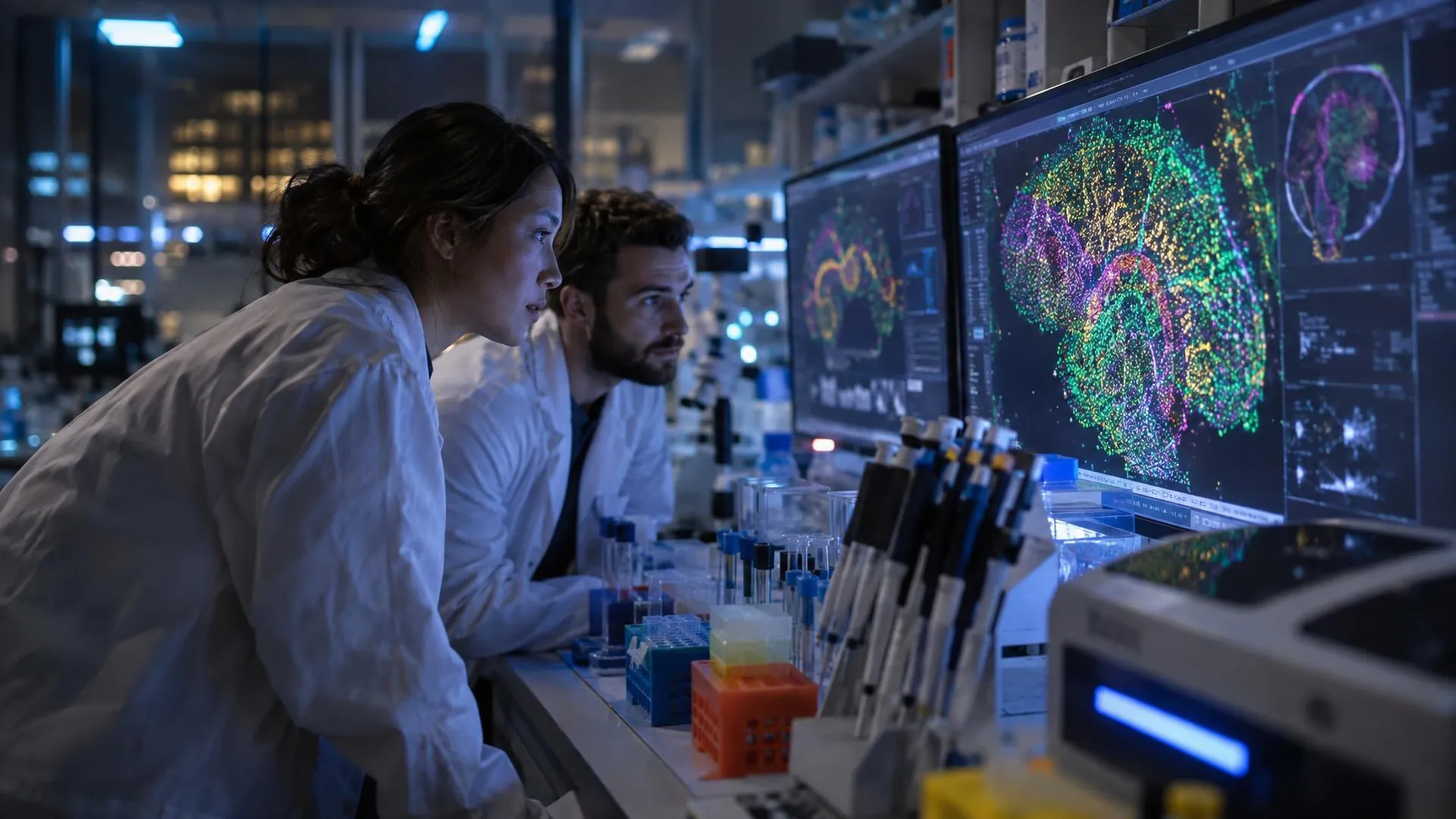
The approach, which OpenAI calls distributed biological reasoning, split the analysis among thousands of agents who examined a whole-brain CRISPR atlas, a dataset that shows how genetic disruptions affect different types of cells in the mouse brain. Each agent studied a genetic alteration, analyzed cellular responses, searched the scientific literature, and proposed explanations for the findings. The agents’ accounts were combined into an atlas of reasoning that linked genes, cellular effects, relevant publications, and possible biological mechanisms.
OpenAI said the research team estimated that a comparable human analysis and literature review, conducted one perturbation at a time, would take months to a year. The agents reproduced the results of the human analyzes as they uncovered additional leads, and their assessments of novelty and scientific value were in line with the judgments of blinded human experts.
Sarah Teichmann, Chair of Stem Cell Medicine at the University of Cambridge and founding co-chair of the Human Cell Atlas, said in the OpenAI announcement: “We build cell atlases so other scientists can make discoveries we haven’t yet imagined. Artificial intelligence could help more researchers explore these resources and turn unexpected observations into new questions to test.”
A companion preprint, Distributed AI Agents Enable Comprehensive Biological Information Discovery at Scale, was published on bioRxiv on October 16, 2026, and has not been certified by peer review. Its authors are affiliated with the Howard Hughes Medical Institute and Scripps Research, OpenAI, PerturbAI, and the University of California at San Diego, with Xin Jin of Scripps Research listed as the corresponding author. The declaration of competing interest reveals that six of the authors are employees of OpenAI, two are employees of PerturbAI, and Grace Zheng and Xin Jin are co-founders of PerturbAI.
Tsc2 divergence and cholesterol advantage
The agents identified an unexpected difference between Tsc1 and Tsc2, two genes that work together to control mTOR, an important regulator of cell growth, metabolism and aging, the announcement said. Disrupting both genes had similar effects in different groups of neurons. In the cerebellum, which helps coordinate movement, disrupting Tsc2 altered the activity of dozens of genes involved in neuronal communication, while disrupting Tsc1 produced few changes.
The announcement notes that in people with tuberous sclerosis, abnormalities in the cerebellum are strongly linked to TSC2 mutations, and that while drugs that reduce mTOR activity can treat some brain tumors and seizures, the learning and behavioral difficulties associated with the disease remain difficult to address. Agents identified a specific group of neurons and cellular changes for further investigation.
The agents also found a trace in DCTN1, a gene whose mutations cause Perry syndrome, a neurodegenerative disease with symptoms similar to Parkinson’s. DCTN1 is involved in cargo shifting within neurons, and in Atlas, disruption of Dctn1 increased the expression of genes involved in cholesterol production. The agents linked this observation with research suggesting that problems with cholesterol transport can cause cells to produce more cholesterol, raising follow-up questions about whether disrupting DCTN1 changes the distribution of cholesterol within neurons and whether such changes could contribute to neurodegeneration. According to the announcement, human experts deemed the hypothesis novel, consequential and worthy of further investigation.
Tomasz Nowakowski, associate professor of neurological surgery at UCSF, said the possible link between neuronal function and cholesterol metabolism shows how clues scattered across different fields, once linked, can offer a new way of thinking about disease biology.
Distributed agents and single agent
The team tested whether a single agent, given the entire dataset, could correspond to thousands of agents working in parallel, keeping the model and resources fixed. As the workload grew, the single agent searched the literature less, citing only 11 references in the largest workload, while the distributed agents cited more than 700. In blind comparisons, human experts preferred the distributed agent reports over the single agent reports 75% of the time.
The preprint reports that, without access to the original manuscript, agents recovered its conclusions, predicted delayed perturbation effects, and identified perturbation relationships with shared or opposing outcomes across effect strengths. The authors say that the distributed agents scaled literature coverage with the workload, retrieving hundreds of times more references than single-agent mode, and that blinded human experts supported the agents’ discovery rankings.
Access to the atlas, code and dataset
The reasoning atlas and the underlying distributed agent framework are publicly available in a GitHub repository released under the MIT license. The repository provides the agent runtime, corpus tools and notebooks used for analysis, and supplementary figures and tables of the manuscript. Documents a read-only hosted corpus service with MCP endpoints that expose findings, claims, supporting evidence, and analysis tools; Since the hosted server does not include the raw dataset files, the repository also provides instructions for running the framework locally via the Codex CLI. The repository’s latest commit, which updated the bioRxiv citation, license, and hosted service documentation, is dated October 21, 2026.
The dataset analyzed is PerturbAI’s whole-brain in vivo CRISPR Perturb-seq atlas on Hugging Face. The data set sheet describes 7.7 million cells, 7,739,370 rows totaling 205 GB, with single-nucleus profiling across 19,070 mRNAs and 8,588 sgRNAs, measuring the effects of nearly 2,000 disease-related genes, with cell annotations drawn from the Allen Institute’s mouse whole-brain taxonomy. The entry identifies a March 2026 bioRxiv manuscript, “Genome-scale functional mapping of the whole mammalian brain with in vivo Perturb-seq,” as the publication underlying the atlas.
OpenAI said researchers can use the atlas to compare related genes, investigate unexpected responses and identify promising leads to pursue, and that the results help prioritize further experiments needed to test proposed biological mechanisms.













Post Comment