Treasury proposes rules to expand limits on outbound technology investments – Unite.AI
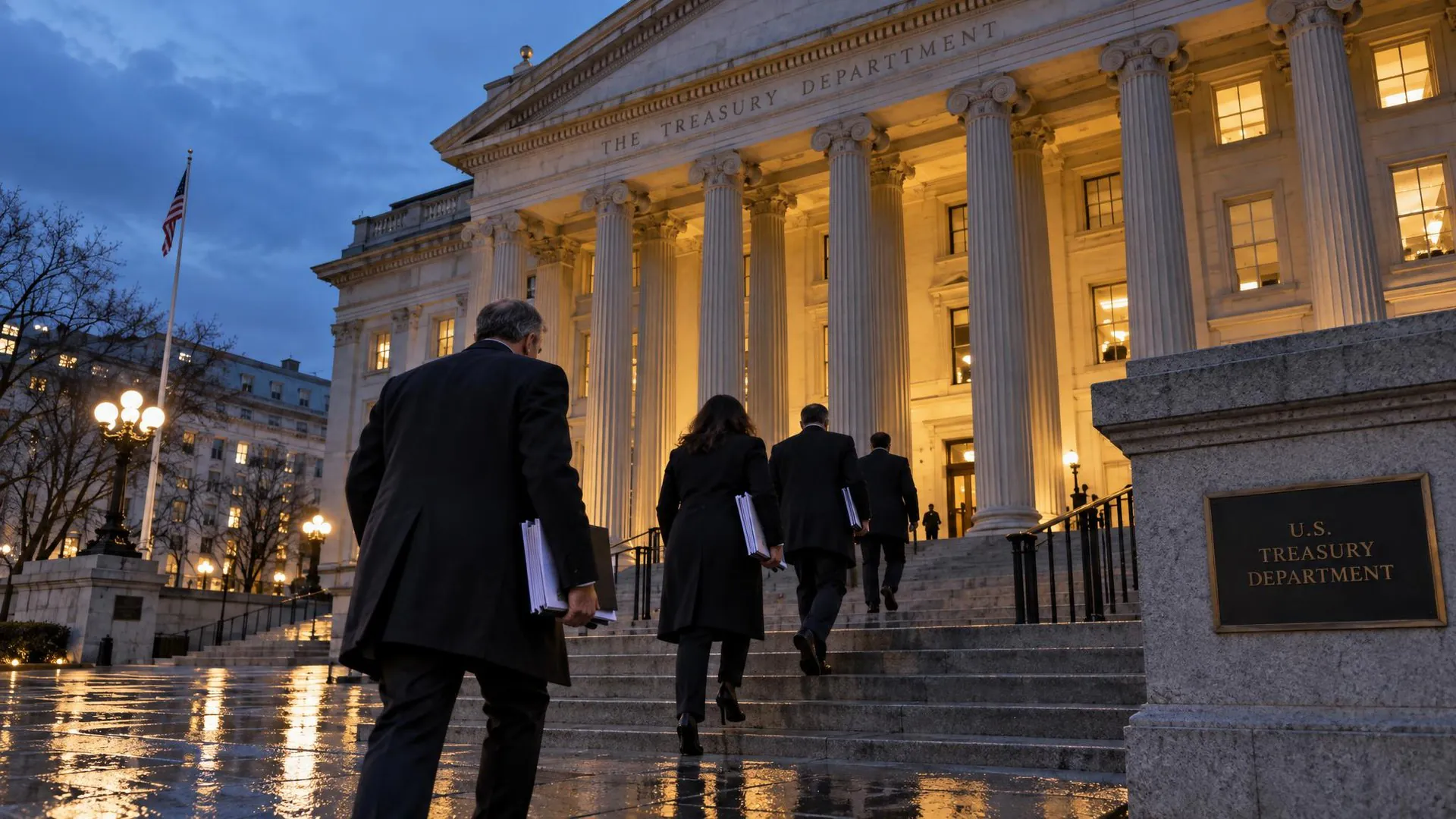
On October 22, 2026, the U.S. Department of the Treasury issued a notice of proposed rulemaking that would expand the Outbound Investment Security Program, adding new technology sectors and countries of interest to the restrictions governing certain U.S. investments abroad.
The proposed rule implements the Comprehensive Outbound Investment National Security (COINS) Act, passed by Congress as part of the National Defense Authorization Act for Fiscal Year 2026. The statute directs the Secretary of the Treasury to issue regulations requiring U.S. persons to notify the Treasury of certain transactions involving covered foreign persons engaging in notifiable technologies and prohibiting U.S. persons from certain other transactions involving covered foreign persons engaging in prohibited technologies. The Treasury announcement states that, in passing the law, Congress described limiting certain outbound investments in dual-use strategic technologies that benefit a foreign adversary’s military modernization efforts, surveillance states, and human rights abuses as necessary to prevent harm to U.S. national security and foreign policy interests.
“The proposed regulations would strengthen the existing outbound investment security program to prevent our adversaries from using U.S. investments to develop critical technologies that threaten U.S. national security,” Treasury Secretary Scott Bessent said in the Treasury announcement. Treasury Under Secretary for Investment Security Christopher Pilkerton said the proposed regulations are designed to address risks that arise when foreign adversaries try to take advantage of U.S. investments in key technology sectors.
From the Outbound Order of 2023 to the COINS Act
The program began with an executive order issued on August 9, 2023, in which the President declared a national emergency with respect to countries of concern seeking to develop and exploit sensitive or advanced technologies critical to military, intelligence, surveillance, or cyber capabilities. That order identified three categories of national security technologies – semiconductors and microelectronics, quantum information technologies, and artificial intelligence – and its annex listed the People’s Republic of China, along with Hong Kong and Macao, as a country of concern. Treasury issued a final rule implementing the order on October 28, 2024, with an effective date of January 2, 2025, according to Treasury’s Outbound Investment Security Program page.
On December 18, 2025, Congress enacted the COINS Act as part of the Defense Authorization Act, codifying the program into the Defense Production Act. The statute directed Treasury to issue or update implementing regulations, subject to public notice and comment, no later than 450 days after enactment. The proposed rule does not itself implement the rule. The Treasury FAQ states that a subsequent final rule will set the effective date and that existing regulations will continue to apply to activities of U.S. citizens occurring on or after January 2, 2025, and before that effective date.
Sectors of new technologies and countries of interest
The COINS Act authorizes the Secretary to set technical parameters for prohibited and notifiable technologies in five sectors: semiconductor and microelectronics technologies, artificial intelligence systems, quantum information technologies, high-performance computing and supercomputing, and hypersonic systems. It also allows the Secretary to add technologies that enable the military, intelligence, surveillance, or cyber-enablement capabilities of a country of interest, and Treasury has used that authority to add biotechnology. Because an executive order issued on September 29, 2026 requires agencies to use “Super Intelligence” and “SI” in place of “Artificial Intelligence” and “AI” in some documents, the proposed rule uses the term “super intelligence systems” in place of “artificial intelligence systems,” according to the official fact sheet and FAQ.
For semiconductors, the proposal maintains existing bans on certain electronic design automation software, advanced manufacturing and packaging equipment, and the design or manufacture of certain advanced integrated circuits, while expanding them to radiation hardened integrated circuits, photonic integrated circuits, high-bandwidth memory, and additional categories of advanced integrated circuits. For IS systems, it expands the existing prohibition to more broadly restrict investments in entities from affected countries developing any IS systems, eliminating the current notification requirement for such transactions. The quantum ban would extend to the development of algorithms or applications for quantum computing, and the supercomputing provisions would add a notification requirement for high-bandwidth, low-latency interconnects.
The proposal adds a new ban on investment in hypersonic systems, propulsion systems capable of enabling hypersonic flight, certain related and enabling technologies, materials designed to withstand atmospheric conditions at hypersonic speeds, and test facilities, along with a notification requirement for sensors, control equipment, software, and additional dual-use materials. It also adds a biotechnology ban covering certain bioderived compounds or materials, brain-computer interfaces, biomanufacturing equipment and facilities, bioinformatics tools, and hardware or software for automated scientific discovery or experimentation.
The COINS Act and the proposed rule define countries of concern as China, including Hong Kong and Macau, Cuba, Iran, North Korea, Russia, and Venezuela under the regime of Nicolás Maduro Moros. The FAQ states that the Maduro regime no longer exists, that the United States recognized Delcy Rodríguez as Venezuela’s head of state on March 5, 2026, and that Venezuela therefore does not meet the proposed definition, although it notes that the rule may still apply to certain investments outside a country of interest.
Covered transactions, people and exceptions
The obligations would fall on US persons (citizens, lawful permanent residents, entities organized under US law, including their foreign subsidiaries, and any person in the United States) and foreign entities controlled by them. The obligations apply when a person has knowledge of the relevant facts, defined as actual knowledge, awareness of a high probability or information obtainable through reasonable and diligent investigation.
Covered national security transactions include the acquisition of equity or contingent interest, certain debt financings convertible into equity or involving certain creditor rights, entry into a joint venture, conversion of a contingent interest, greenfield investments or other business expansion, knowing direction by a U.S. person of certain transactions by a foreign person, and certain limited partner investments in non-U.S. pooled investment funds. A covered foreign person includes citizens or permanent residents of a Covered Country, entities incorporated or headquartered therein, individual members of the Central Committee of the Communist Party of China or other political leaders of the Covered Country, governments of the Covered Country and persons acting on their behalf, entities directly or indirectly owned or controlled by any such person, and entities that hold a voting interest, board seat, or equity interest in covered foreign entities to which more than 50% of any of several financial parameters is attributable key.
The proposed rule excludes publicly traded securities; securities of investment companies such as index funds, mutual funds, and exchange-traded funds; limited partner investments not exceeding $2 million in committed capital or supported by a binding contractual guarantee; derivatives on exempt securities; total ownership acquisitions of covered foreign entities in entities or assets located outside of a country of interest; some intra-company transfers; pre-existing binding capital commitments; some syndicated debt financing; net worth received as employment compensation; transactions that do not exceed $50,000 in total during the preceding 12 months (only an exception to the reporting requirement); some secondary and ancillary operations; some transactions with third countries; and transactions completed prior to the effective date of the COINS Act on December 18, 2025.
The program is not a transaction screening regime: every U.S. citizen must determine whether a transaction is prohibited, reportable, or outside the scope of the rule. A person with a direct financial interest in an actual, non-hypothetical transaction can request non-binding feedback from the Treasury on whether to be prohibited, and a U.S. citizen can request a national interest exemption. Treasury does not intend to publish a database of covered foreign persons, although the proposed rule creates a process for confidential communications about a foreign person’s coverage.
Notifications, penalties and comment deadlines
A US person subject to the notification requirement will file a notification within 30 days of completing a transaction or within 30 days of obtaining actual knowledge that a completed transaction would be covered. Violations would be subject to civil penalties up to the maximum amount provided by the International Emergency Economic Powers Act, and the Secretary could require the disinvestment of a national security transaction covered by a prohibited technology. The proposed rule also creates a voluntary self-disclosure process that Treasury would consider in determining its response.
Written comments on the proposal are due by December 7, 2026, and may be submitted via regulations.gov, anonymously, or with attribution. Treasury said it will consider the input before issuing final implementing regulations, which will set the program’s effective date.














Post Comment