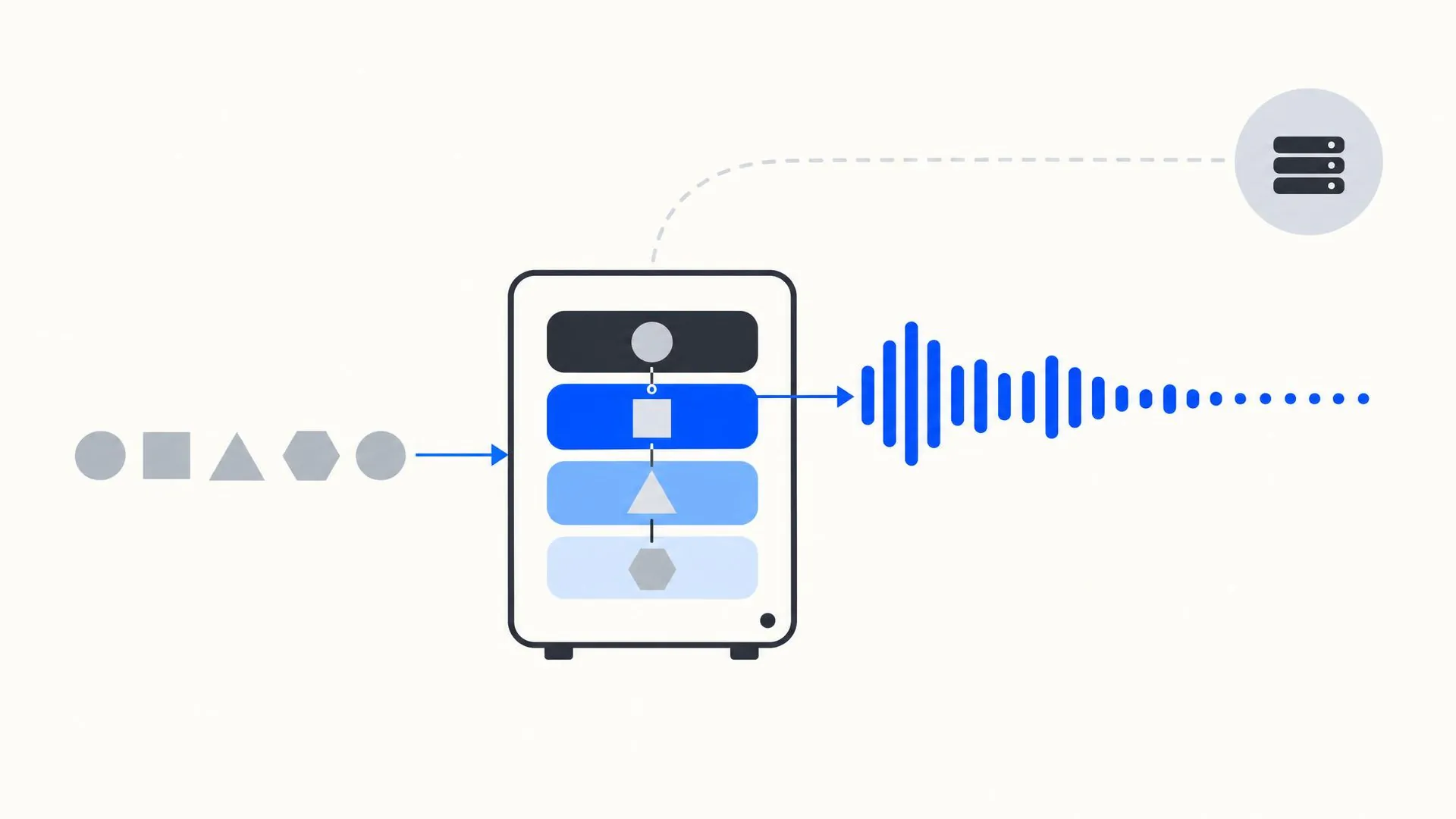
Phonon TTS on Gradium device exceeds 200,000 downloads in two weeks – Unite.AI
Gradium reported on November 5, 2026 that its text-to-speech models on the Phonon device had been downloaded more than 200,000 times in the first two weeks, in a technical follow-up published on Hugging Face.
Gradium said Phonon ranked first for intelligibility in German and Spanish in the Open TTS rankings and in the top three in every language evaluated, alongside models up to 100 times larger.
The Gradium chart of 95th percentile CPU time for audio first placed Phonon 31m English first at 28 milliseconds and Phonon 40m English second at 38 milliseconds, with Pocket TTS at 165 milliseconds. Lower values are better. Time to first audio measures how long a user waits for playable speech, making it directly relevant for voice agents and other interactive applications.
What does the ranking measure
The follow-up describes evaluation in 23 languages covering intelligibility, real-time inverse factor, time to first audio, and automated naturalness measures, with speaker similarity added for voice cloning. Hugging Face’s ranking methodology calculates intelligibility by comparing automatic speech recognition transcriptions to the original instructions using word or character error rates.
Streaming tests run one expression at a time using common prompts and the same hardware. For models without a streaming interface, the times cover the generation of the entire utterance since playback cannot begin earlier. Voice cloning evaluations separately compare speaker embeddings from generated audio and a reference clip.
Hugging Face cautions that recognition-based error rates are an indicator of intelligibility, while including similarity estimates speech identity preservation. None of the measures directly establish naturalness, expressiveness, or listener preference, so automated rankings are not a substitute for human preference tests. A Listen tab allows visitors to compare the outputs generated behind the metrics and rate them.
Open weights and trading terms
The release of the underlying open weight occurred on October 20, 2026, making the new disclosure an early adoption and evaluation update rather than a debut of a separate model. The English Phonon 31m model board lists 64.5 MB of 8-bit quantized weights under Apache 2.0, which allows commercial use.
The 40 meter variants have 74.6 MB of quantized weights and cover English, French, German, Spanish and Portuguese with CC BY-NC 4.0, through separate language checkpoints or a multilingual model. For commercial products built on these non-commercial checkpoints, Gradium prices the license based on the number of users rather than the amount of speech generated.
Phonon produces mono audio at 24 kHz and can stream speech as generation continues. It is intended for offline assistants, accessibility tools, games and interactive applications that cannot wait for a round trip to the cloud, keeping the text on the user’s device. More than 100 built-in voices are available. Gradium Studio can also clone a voice from a short recording with the speaker’s consent or design one from a text description for download and local use.
Distribution routes and limits
Gradium’s PTT runtime is written in Rust and does not require PyTorch. Supports CPU, GPU and NPU backends including Intel, Arm, WebAssembly, CUDA, Vulkan, Metal, WebGPU, Apple Core ML and supported Snapdragon hardware. Its packages cover browser, mobile, desktop, and local server integrations.
Phonon is also available in Transformers since version 5.21 as a reference PyTorch implementation. While PTT focuses on a single stream on the device, Transformers targets GPU throughput through batch generation and full graph torch.compile. The Transformers documentation describes a causal transformer that produces 32-dimensional continuous audio latents at 12.5 Hz for decoding to 24 kHz audio. Voices are provided as precomputed 512-dimensional speaker latents.
These mechanics leave some integration work outside the checkpoint. The speaker codec has not been released and the audio tokenizer is decoder only, so Transformers cannot clone voices directly from recordings. Additionally, its tokenizer doesn’t expand numbers, amounts, symbols, or addresses like the Gradium runtime does. Long inputs are broken into sentences, preventing prosody from spanning the entire text.
The implementation choice is therefore concrete: PTT serves a single private stream on the user’s hardware, while Transformers serves GPU synthesis in batches. In both paths, vocal preparation and linguistic management of numbers, symbols and addresses remain part of the integration together with the checkpoint itself.











Post Comment